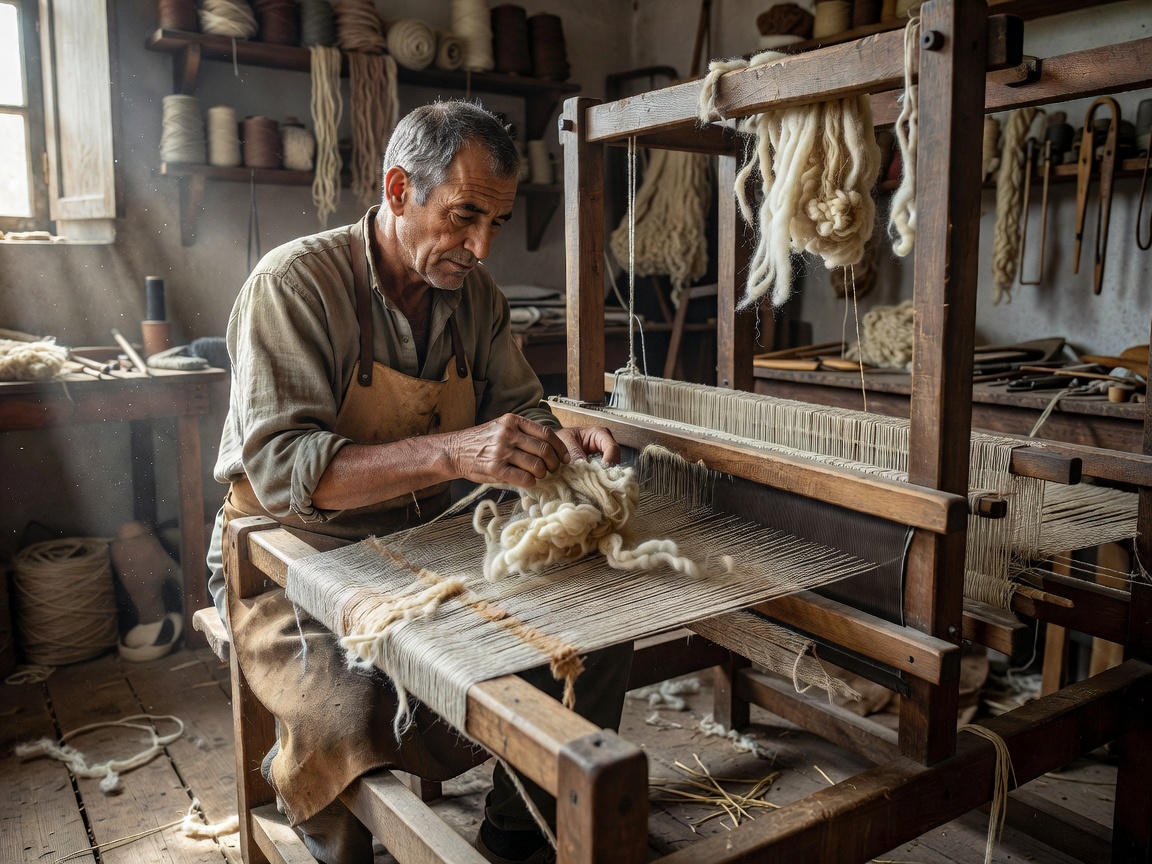
1. The Gotland & Norwegian Wool Tradition
In the unforgiving climates of coastal Scandinavia, wool has never been a decorative luxury—it was a survival necessity. Nordic heritage sheep breeds, such as Sweden's Gotland Pelt sheep and Norway's Spælsau, produce a dual-coated fleece. The inner coat provides ultra-fine micro-crimped insulation, while the outer guard hairs provide natural water repellency due to rich natural lanolin levels.
Independent ateliers in Scandinavia work directly with regional scourers to avoid harsh chemical stripping, preserving the natural self-cleaning properties and distinctive smoky aroma of untreated Northern wool.

2. Low-Impact Mineral & Plant Colorways
The hallmark muted palette of Nordic menswear—Forest Black, Nordic Sage, Warm Stone, and Snow—is deeply rooted in Scandinavian botanical dyeing traditions. Rather than relying on heavy metal synthetic reactive dyes that pollute regional waterways, conscious brands utilize birch bark extracts, alder cone tannins, and OEKO-TEX Standard 100 closed-loop dye baths.
This yields complex, desaturated hues that do not aggressively fade under UV sunlight, but rather develop an organic patina that mirrors the landscape.
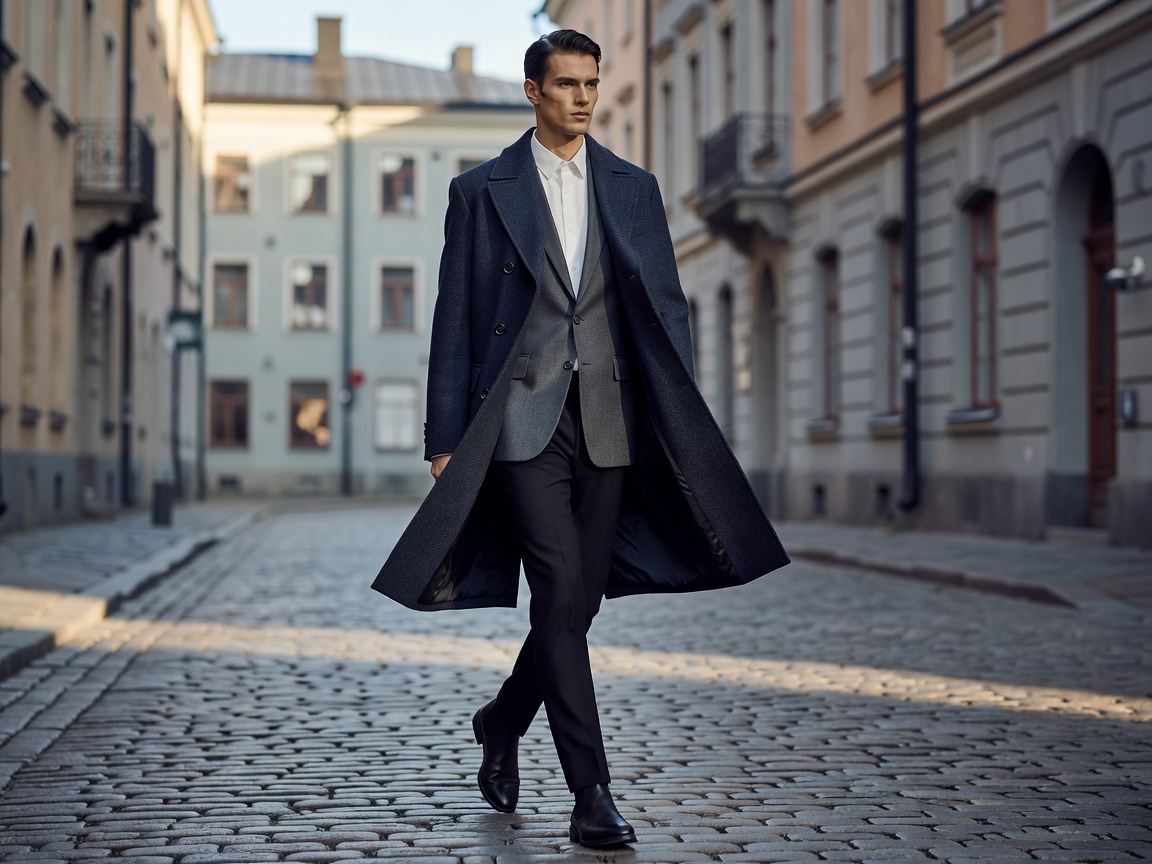
3. FRENN's Zero-Waste & Lifetime Repair Paradigm
Finnish menswear label FRENN provides a benchmark case study in contemporary garment architecture. By deploying computer-aided nested pattern cutting in their Baltic ateliers, fabric offcuts are reduced to below 4% per production run.
Furthermore, their garments are engineered for disassemblability. Critical stress seams feature twin-needle basting stitches that allow tailoring adjustments over a wearer's lifetime without compromising structural fabric integrity.